How Hotels Handle Instagram Booking Questions After Hours
Answer Instagram booking questions after hours in 3 parts: acknowledge fast, route correctly, and send guests to the right booking path.
How do hotels handle Instagram booking questions after hours?
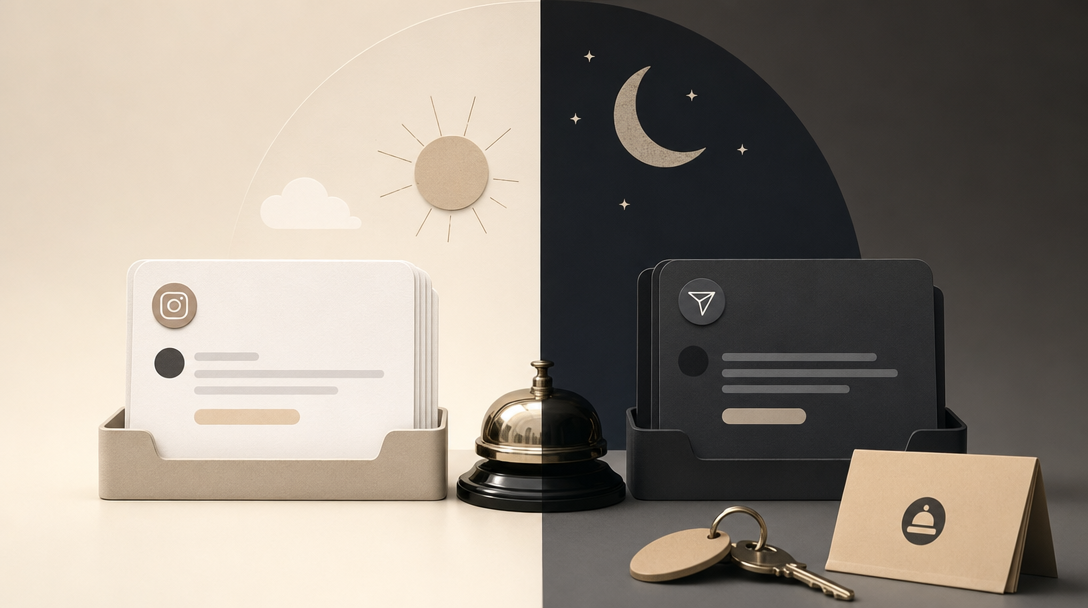
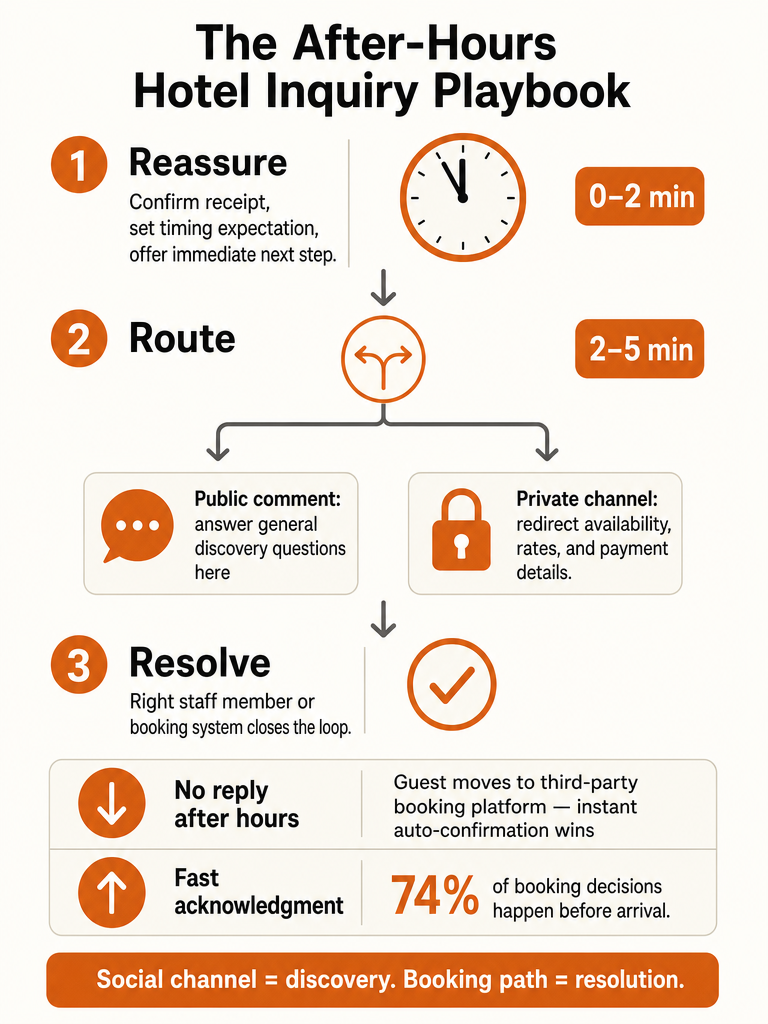
Hotels handle Instagram booking questions after hours with a three-part system: acknowledge fast, route correctly, and resolve through the right booking path. That structure keeps a guest from feeling ignored at midnight without forcing staff to be always on. Jurny defines the first response layer, Reassure, as happening within 0, 2 minutes, followed by routing within 2, 5 minutes.
The reason this matters is timing. Travel decisions often happen outside business hours, and if a hotel ignores a late-night inquiry, the guest may move to another property (Source: Mimin IO). Online Travel Agencies answer instantly with automatic confirmation at any hour, which is one reason many guests still default to them rather than waiting for a hotel to wake up.
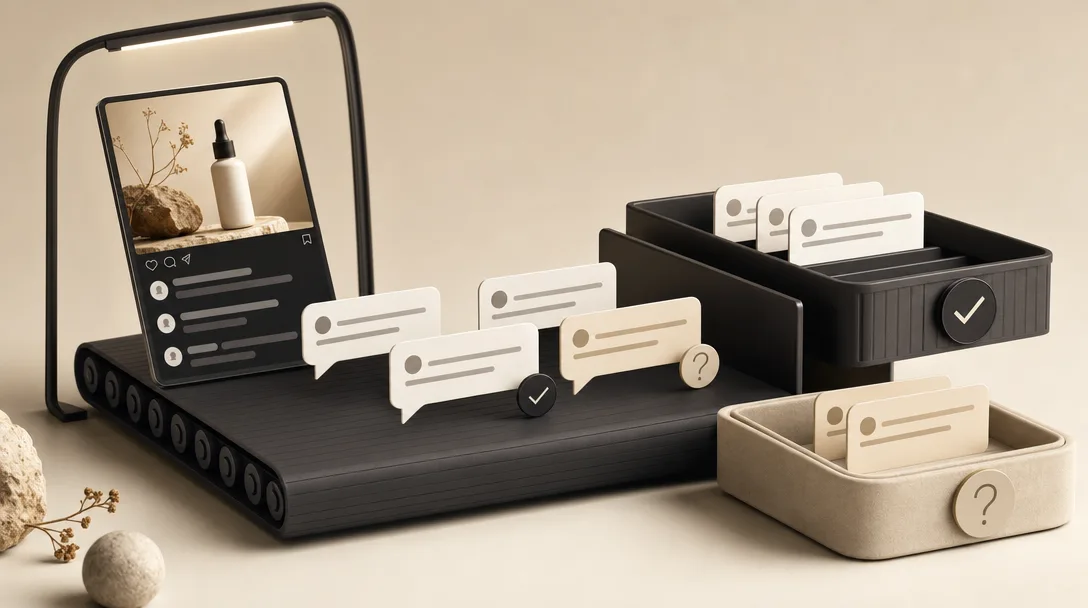
Instagram adds a wrinkle most after-hours advice skips. The comment thread is public. A question about rates or availability sitting unanswered under a viral Reel isn't just a missed booking: it's a missed booking everyone can see. So the after-hours job has two layers: respond quickly enough to hold intent, and respond in a way that fits a public comment rather than a private reservation desk.
The sections below split that work into the part guests see in comments and the part that belongs in a private booking path.
What should a hotel say immediately when someone asks about availability or rates after hours?
The first after-hours reply should confirm the message was received, set a clear expectation for timing, and offer an immediate next step when one exists (Source: Jurny). For an availability or rate question on Instagram at 11 PM, that means acknowledging the comment, pointing to where live rates actually live, and signaling when a person will follow up.
A workable public comment reads something like: "Thanks for asking! Live availability and rates for your dates are on our booking page: link in bio. Our team confirms anything specific first thing in the morning." It does three jobs at once. It confirms receipt, sets timing, and hands the guest a path they can use right now.
The trap is answering reservation-specific detail in a public thread you can't verify at 11 PM. Quoting a rate you can't honor, or confirming a date you haven't checked, creates a problem the morning shift inherits.
Different recurring questions deserve different default answers:
- Availability and rates: point to the live booking path; never quote a specific room rate you can't confirm.
- Check-in timing and policies: answer publicly when the policy is fixed and on your website.
- Cancellations or anything tied to a name or payment: redirect to a private channel.
The safest after-hours comment confirms you saw the question and routes the guest, rather than improvising a number you can't stand behind.
How fast should a hotel reply on Instagram?
Speed expectations split into two layers, and the first one matters most. Jurny frames the first after-hours response, Reassure, as landing within 0, 2 minutes, with routing to the right person within 2, 5 minutes. The point isn't that a full answer arrives in two minutes: it's that the guest knows they've been heard almost immediately.
Guest tolerance varies by channel and by how premium the property is. One traveler on the r/FATTravel forum put the acceptable range at "instantly to 48 hours," noting that below true luxury, emails feel like they "go to a black hole" and a phone call becomes necessary (Source: Reddit r/FATTravel). That spread tells you something: guests calibrate patience to the channel they chose and the brand they're talking to.
Instagram comments sit at the impatient end. They're public, they're casual, and they're often part of a discovery spree where the guest is comparing three properties at once. A reply that arrives the next afternoon competes with whoever answered first.
The realistic target after hours: acknowledge within minutes, even if the full confirmation waits for the morning shift.
Public comment vs private handoff: which booking questions belong where?
Answer general discovery questions in the public comment; move reservation-specific, payment, or personal details to a private path. Visito describes Instagram as a top-of-funnel channel used for discovery questions, vibe checks, and quick verification before a guest moves to booking. That maps cleanly onto a public-versus-private split for comment threads.
Public comments are great for answers that help everyone reading. Many people scrolling the same Reel have the same question, so a clear public reply does double duty: it serves the asker and pre-empts the next ten.
Personal detail is the line. The moment a question touches a guest's name, dates tied to a reservation, payment, or a cancellation request, the answer doesn't belong in a thread strangers can read.
| Question type | Where it belongs | Why |
|---|---|---|
| "What's your nightly rate?" | Public comment + booking link | Same answer helps every reader |
| "Do you allow late check-in?" | Public comment | Fixed policy, useful to all |
| "Is the rooftop pool open in March?" | Public comment | Discovery / vibe check |
| "Can I move my booking to the 14th?" | Private channel | Tied to a specific reservation |
| "Here's my card to hold the room" | Private channel | Payment detail, never public |
| "Why was I charged twice?" | Private channel | Personal account issue |
For sensitive questions, a short "DM me and we'll sort it out" keeps the public thread clean while still moving the guest forward. The public answer builds trust at scale; the private handoff protects the individual.
Is Instagram the right place to complete a hotel booking?
Instagram is a discovery and verification channel, not the final place to manage every booking detail. Visito describes Instagram DMs as where guests ask discovery questions, run vibe checks, and do quick verification before they move to book. Mimin reports that guests make 74% of hotel booking decisions before they arrive: which puts the value of Instagram squarely in that pre-arrival window.
So the platform's job is to answer fast, build confidence, and hand off cleanly. A guest who gets a quick, accurate reply about the room, the location, or the cancellation policy is a guest more likely to follow your booking link.
Trying to run the whole reservation inside a comment thread or DM creates friction. Rates change, dates need verification, and payment never belongs in a public reply. The cleaner play is to treat Instagram as the front door and your booking page as the desk.
That's also why the #TravelUnfiltered episode on Instagram frames the goal as fixing "the booking gap": the gap is the moment between a guest's question and a confirmed reservation. Close it by answering on Instagram and routing to your booking path, not by improvising a reservation in the comments.
What's the best way to handle after-hours requests in hospitality?
The best after-hours setup runs on three moves: immediate acknowledgment, triage and routing, then resolution by the right person or system. RealVoice frames this around hotels, resorts, and vacation rentals using a hospitality call center to cover requests once admin hours close. Jurny's layered model gives the timing: Reassure in 0, 2 minutes, Route in 2, 5 minutes, then resolve.
Here's how that translates to an Instagram comment thread after hours:
- Acknowledge. Reply fast to confirm the comment was seen and set timing. "Got your question: here's the quick answer / our team confirms details in the morning."
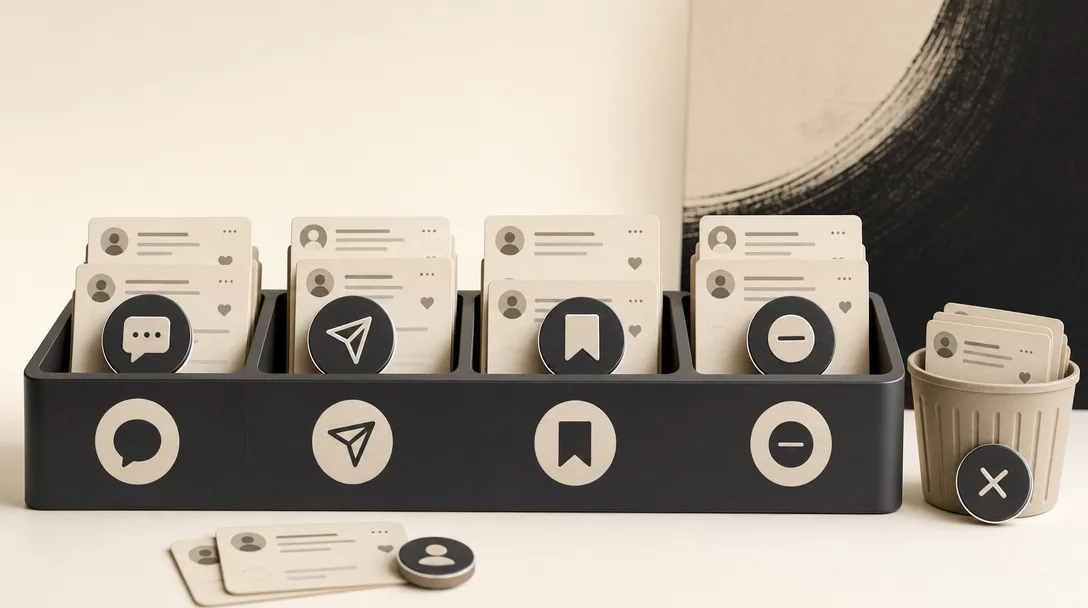
- Triage. Decide whether it's a public-safe answer (rate, policy, availability link) or a private handoff (reservation, payment, cancellation).
- Route. Answer in the thread, or redirect with a "DM me" for sensitive detail, so the right person picks it up.
- Resolve. The booking link, the morning shift, or the on-call staffer closes the loop.
The structure matters because it protects two things at once: the guest's sense of being heard, and the team's right to sleep. You don't need a 24-hour front desk to look responsive: you need a fast acknowledgment and a clear route.
How do hotels win bookings while their team is asleep?
Hotels win after-hours bookings by being responsive when the decision is actually being made: late at night, off-hours, on the guest's schedule. Travel decisions frequently happen outside business hours, and a hotel that goes silent risks pushing the guest toward a property that answered (Source: Mimin IO). With 74% of booking decisions made before arrival, the pre-arrival conversation is where the booking is won or lost.
The competitive pressure is concrete. OTAs respond instantly with automatic confirmation at any hour, and Mimin presents that instant-answer behavior as a core reason guests keep defaulting to them. When your Instagram comment sits unanswered until 9 AM, you're not competing with another hotel: you're competing with a platform that never sleeps.
A fast first response after hours does more than look polished. It keeps a late-night guest from booking elsewhere while your team is offline.
You don't have to match an OTA's instant confirmation to compete. You have to close the silence. An acknowledgment within minutes, a clear next step, and a booking link does most of the work of holding intent until your team is back online. The goal is simple: never let a ready-to-book guest hit a wall of silence on a public thread.
Instagram vs WhatsApp vs SMS: which channel should handle the next step?
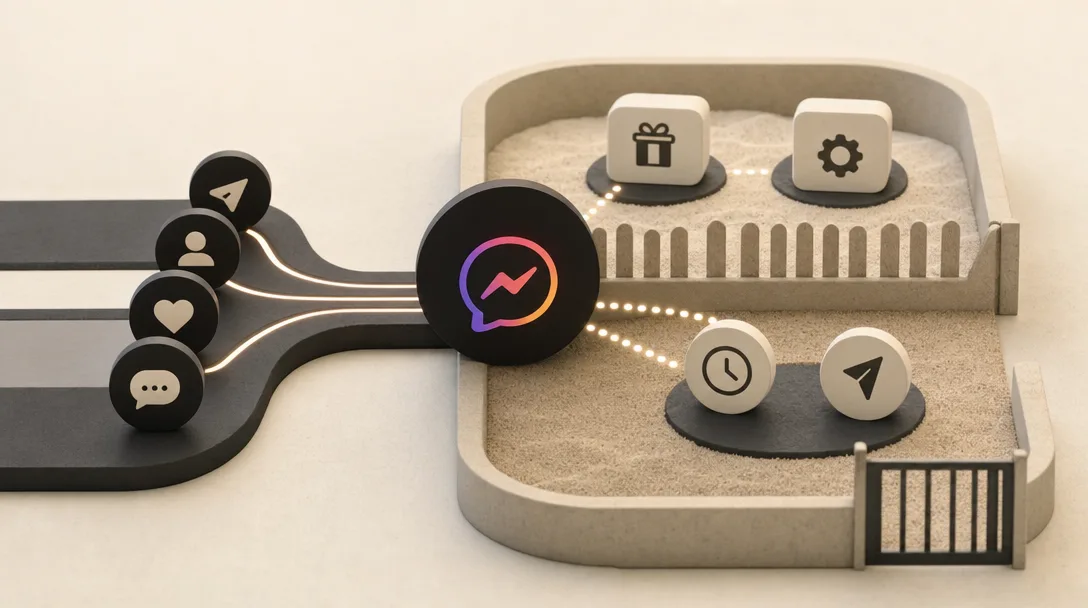
Channel choice should follow guest intent, not what's trendy. Visito argues that different channels create different response-time expectations, so hotels should pick messaging channels based on what the guest is trying to do. Instagram is broad discovery; WhatsApp and SMS lean toward confirmed, one-to-one conversation with a guest you already know.
Each channel has a natural role in the after-hours handoff:
| Channel | Best role | After-hours fit |
|---|---|---|
| Instagram comments | Public discovery, quick verification | Acknowledge fast, answer general questions, route sensitive ones |
| Instagram DMs | Private vibe checks, redirected questions | Good for "DM me" handoffs from comments |
| Confirmed guest conversation | Better once identity and booking are known | |
| SMS | Direct, high-deliverability reach | Useful for booking-related follow-up |
Instagram and Meta sit at the top of the funnel: Instagram Business reports over 150 million users talk to a business via DMs monthly (Source: Iresponze). That's where the conversation starts. The move that completes a booking, or handles anything tied to a reservation, often belongs on a channel where you already know who you're talking to. Answer the discovery question where it lands; route the rest to the channel that matches the intent.
How should lightly staffed hotels route late-night booking questions?
Lightly staffed properties should lean on a short, consistent routing rule rather than heroics. RealVoice positions hotels, resorts, and vacation rentals as exactly the operators who need a defined after-hours path: a call center or equivalent that catches requests when the front desk is offline. For an Instagram thread, the equivalent is a clear rule for who answers what, and when.
The risk for small teams is fragmentation. Kpability notes that hotels with conversations scattered across channels end up with slower follow-ups and inconsistent guest communication. When one comment lives on Instagram, a reply lives in someone's personal DMs, and a follow-up sits in email, the late-night question quietly falls through.
A workable rule for a small team:
- One default acknowledgment for after-hours availability and rate questions: same wording every time.
- A public-safe answer set for fixed policies (check-in, parking, pets) anyone on shift can post confidently.
- A redirect line for reservation-specific questions: "DM us and we'll confirm in the morning."
- A single morning queue where every routed question lands, so nothing scatters.
The point isn't to cover every hour with a human. It's to make sure every late-night question has a predictable destination.
How can hotels avoid inconsistent Instagram replies across shifts?
Consistency comes from shared rules, not shared instincts. When multiple staff members touch Instagram across shifts, replies drift: one person quotes a rate, another guesses at the cancellation policy, a third uses a tone the brand wouldn't. The fix is a written reference everyone uses: approved answers for rates, availability, cancellation, booking links, and the voice the brand actually speaks in.
Three things should be locked before anyone replies after hours:
- Facts. Current rate ranges, cancellation terms, check-in times, and the correct booking link: so no one improvises a number.
- Boundaries. What's answered publicly versus redirected to a private channel.
- Voice. Greeting, sign-off, emoji habits, and how formal or casual the brand sounds.
This is where context-aware comment tools earn their place. Instead of a junior staffer drafting from memory at midnight, replies can be conditioned on the brand's real past replies, tone preferences, and sign-offs: so a fill-in shift sounds like the same hotel. That's the difference between automation that protects the brand voice and a keyword bot that flattens it.
Inconsistency across shifts comes from a missing rulebook, not a missing person: and the rulebook is cheaper than the lost trust.
For a deeper look at how this works mechanically, see how context-aware automation reads the post instead of the keyword.
When should hotels use context-aware comment automation instead of keyword triggers?
Use context-aware automation when the right answer depends on what the specific post is about: not when a single keyword can safely fire the same canned line everywhere. Keyword-rule replies break the moment "available?" appears under both a room photo and a spa promo. Context, not triggers: a reply should reference what the post actually shows.
That distinction matters most on Instagram, where one account runs room shots, Reels, package launches, and event posts in the same feed. A booking question under a suite Reel needs a different answer than the same words under a dinner-special post. Reading the post first is what keeps the reply sensible.
Control is the other half. Hotels handling rates, cancellations, and reservations can't hand the public thread to an unsupervised bot. The mechanisms that make automation safe here:
- Approval queue / review mode: see every drafted reply before it posts during sensitive periods.
- Per-post settings: auto-answer the obvious price-and-availability questions; hold edge cases.
- Exclusion phrases: keep automation off comments that mention cancellations, complaints, or anything sensitive.
- Spam gates: filter scam links and bait before any reply is drafted.
ReplyMagic works this way for Instagram comments specifically: it reads each post's image or Reel before drafting, replies in whatever language the commenter wrote in, and routes sensitive questions to a "DM me" redirect rather than answering them in public. It answers comments: it isn't a DM bot.
For the conversion side of this decision, compare AI comment replies against keyword auto-responders.
Ready to stop letting late-night booking questions sit unanswered? Get started with ReplyMagic.
Frequently asked questions
How fast should a hotel reply to Instagram booking questions after hours?
The first reply should land within 0, 2 minutes: not a full answer, just confirmation the comment was seen. Jurny's layered model puts routing to the right person at 2, 5 minutes. Instagram comments sit at the impatient end of guest expectations: they're public, casual, and often part of a late-night comparison spree across three properties at once. Whoever answers first wins the intent.
Which booking questions should hotels answer publicly on Instagram vs. redirect to a private channel?
Answer general questions: nightly rate ranges, check-in times, fixed policies, seasonal amenities: in the public comment thread, where one reply serves every reader scrolling the same Reel. Move anything tied to a guest's name, dates, payment, or cancellation to a private channel. A short "DM us and we'll sort it" keeps the thread clean while still moving the guest forward. Payment detail never belongs in a public reply.
How do hotels win bookings while their team is asleep?
74% of hotel booking decisions are made before arrival, which means the pre-arrival conversation: often happening late at night on Instagram: is where the booking is won or lost. OTAs respond instantly at any hour, and that instant-answer behavior is a core reason guests default to them. A fast acknowledgment, a clear next step, and a booking link holds guest intent until the morning shift. You don't need a 24-hour desk; you need to close the silence.
Install Instagram comment automation for booking inquiries: what should hotels look for?
The critical requirement is per-post context, not keyword triggers. A keyword rule fires the same canned line whether "available?" appears under a suite Reel or a dinner-special post: and that mismatch embarrasses the brand publicly. Context-aware automation reads the actual image or Reel before drafting, so the reply references what the post shows. Control features matter too: look for an approval queue, per-post settings, exclusion phrases for cancellations and complaints, and spam gates that filter scam links before any reply is generated.
Try an AI Instagram comment assistant with approval mode: how does review mode actually work?
In approval-queue mode, every AI-drafted reply is held for a human to review before it posts. Nothing goes live automatically. That's the right setting during sensitive periods: a launch, a rate change, a complaint spike: where an unsupervised reply could create a public problem. Once trust is established, obvious questions (price, availability, policies) can shift to auto-send while edge cases stay in the queue. ReplyMagic offers both modes, switchable per post.
How should lightly staffed hotels handle late-night Instagram booking questions without a 24-hour front desk?
A consistent routing rule beats heroics. Set one default acknowledgment for after-hours availability and rate questions: same wording every time. Keep a public-safe answer set for fixed policies anyone on shift can post confidently. Use a "DM us and we'll confirm in the morning" redirect for reservation-specific questions. Run everything routed through a single morning queue so nothing scatters across personal phones and DMs, where late-night guest questions reliably disappear.
Sources
- What's the Best Way to Handle After-Hours Requests in Hospitalitywww.realvoice.com
- Handling after hours booking requests? - Facebookwww.facebook.com
- Why Your Hotel's Instagram Isn't Bringing in Bookings (+ How to Fix It)www.brandphotographyclovisca.com